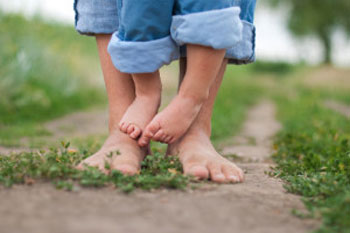
Is your child experiencing pain or difficulty with movement?
Foot, arch, heel, ankle, or leg pain can affect more than just comfort—it can impact how your child moves, plays, and grows.
You might notice:
- Flat feet or ankles that roll inward
- Knees that turn in or out significantly
- Toes pointing inward or outward
- Toe-walking or frequent tripping
- Early signs of bunions or hammertoes
Your child may also:
- Tire easily during activities
- Struggle to keep up with peers
- Avoid sports or physical play
- Have difficulty with balance or coordination
Children with low muscle tone (hypotonia) or special needs may be especially affected by these issues.
Comprehensive Pediatric Foot Care
At Aurora Foot & Ankle Clinic, our podiatrists provide thorough biomechanical assessments, including gait analysis and detailed evaluation of the feet and ankles. We take the time to explain our findings and recommend appropriate, personalized treatment options.
Children’s feet go through many stages of growth and development. While some changes are normal, others may signal underlying concerns that benefit from early intervention. Our approach is proactive—we address issues early when needed, while also monitoring less serious conditions over time.
Why Early Assessment Matters
Children only have one opportunity to develop their foot structure and alignment. Proper care during these formative years can help prevent long-term complications affecting posture, mobility, and overall skeletal health.
Common Pediatric Foot Concerns
We commonly assess and treat:
- Severe flat feet (often with out-toeing)
- In-toeing or toe-walking
- Juvenile bunions (hallux valgus)
- Knock knees (genu valgum) or bow legs (genu varum)
- Clubfoot
- Heel pain (such as Sever’s disease)
- Knee, hip, or lower back pain
- Balance or coordination issues
- Hammertoes or clawed toes
- Ingrown toenails
- Thickened, discolored, or fungal nails
- And more
If you’ve noticed any of these concerns—or simply want peace of mind about your child’s foot health—we encourage you to book a consultation with our podiatry team at Aurora Foot & Ankle Clinic. Early care can make a lasting difference in your child’s comfort, confidence, and development.
It is never normal for a child to experience pain in his or her feet. Foot pain that lasts more than a few days and limits a child’s ability to walk should be examined by a podiatrist. Many adult foot ailments originate in childhood and may be present at birth. Common foot issues that are experienced by children are pediatric flat foot, Sever’s disease, ingrown toenails, and plantar warts.
A child’s foot grows rapidly during the first year. Consequently, foot specialists consider the first year to be the most crucial point in the foot development process. There are ways you can help ensure that your child’s feet develop properly. One way is to carefully look at your baby’s feet. If you notice any deformities, you should immediately seek professional care. You should also loosely cover your child’s foot, since tight coverings may prevent movement and inhibit normal development. Another tip is to change the baby’s positioning throughout the day. If your baby lies down in one spot for too long, it may put an excessive amount of strain on the feet and legs.
It is best that you try not to force a child to start walking. Children will begin to walk when they are both physically and emotionally capable to do so. You should also avoid comparing your child’s walking progress with other children because the age range for independent walking varies. When your child’s feet begin to develop, you may need to change both their shoe and sock size every few months to allow room for their feet to grow.
Kids are sometimes prone to splinters, cuts, and severe injuries because they tend to walk around barefoot. This also makes them more susceptible to developing plantar warts, a condition caused by a virus that invades the sole of the foot through breaks in the skin. These ailments can be avoided by making sure your child wears shoes in unsanitary environments. You should also wash any minor cuts or scrapes on your child’s feet.
Kids are also prone to developing Sever’s disease, which is the inflammation of the growth plate in the heel. Typically the result of overuse, Sever’s disease often develops inactive children who are experiencing a growth spurt. When a child experiences a growth spurt, the heel bone will often grow faster than the other muscles, tendons, and ligaments in his or her lower extremities. This causes Sever’s disease.
As a parent, you should ensure that your child’s feet are developing properly and are being properly maintained. Consequently, it is important that you perform routine inspections on his or her feet to detect any injuries or deformities in their early stages. Early detection and treatment will help to ensure that your child does not develop any serious foot conditions.
